Category: Entrepreneurship

  • How to Escape Poverty: 35 Practical Financial Habits That Change Lives

    How to Escape Poverty: 35 Practical Financial Habits That Change Lives

    A Step-by-Step Guide to Building Skills, Increasing Income, Managing Money and Creating Long-Term Financial Security

    Introduction

    Breaking the Cycle of Poverty Starts With a Practical Plan

    Escaping poverty is rarely the result of one lucky opportunity, one investment, or one dramatic increase in income. For most people, improving their financial position is a gradual process involving better skills, stronger financial habits, increased earning capacity, careful spending, savings, productive relationships, and long-term planning. At the same time, poverty is not caused solely by individual choices. Job availability, wages, education, economic conditions, access to banking, family responsibilities, health costs, inflation, and where a person lives can significantly affect financial opportunity.

    That means there is no universal formula guaranteed to move everyone out of poverty. However, there are practical financial habits that can improve your ability to manage limited resources, pursue opportunities, withstand emergencies, and gradually build assets.

    Whether you live in the United States, Canada, Europe, Australia, Africa, Asia, Latin America, the Caribbean, or elsewhere, these 35 practical financial habits can help you develop a stronger financial foundation and work toward greater economic independence.

    1. Understand What Poverty Really Means

    Poverty is more complicated than simply โ€œnot having enough money.โ€

    It can include inadequate or unstable income, limited savings, high debt, lack of access to education, unemployment or underemployment, insecure housing, limited access to financial services, and an inability to absorb emergencies.

    Understanding your particular financial situation is the first step toward changing it.

    Write down your income, essential expenses, debts, assets, skills, and financial obligations. You cannot build an effective plan until you know your starting point.

    2. Replace a Poverty Mindset With a Growth-Oriented Money Mindset

    A so-called โ€œpoverty mindsetโ€ should not be used to blame people for circumstances outside their control.

    A more useful concept is developing a growth-oriented financial mindset.

    Instead of thinking, โ€œI will never earn enough,โ€ ask:

    What valuable skill can I learn?
    How could I increase my income?
    Which expenses can I control?
    What opportunities exist around me or online?
    What can I start doing today?

    A wealth-building mindset focuses on possibilities while remaining realistic about risks and circumstances.

    3. Treat Education as an Investment

    Education can extend far beyond earning a university degree.

    Vocational training, apprenticeships, professional certifications, community colleges, technical institutes, online courses, employer training, and self-directed learning can all increase your economic value.

    Before paying for training, ask whether employers actually demand the skill and whether the likely income improvement justifies the cost.

    The goal is not collecting certificates. The goal is acquiring marketable knowledge.

    4. Build Employable Skills

    Learn skills people or businesses are willing to pay for.

    Depending on your location, opportunities could include healthcare, construction, plumbing, electrical work, welding, manufacturing, bookkeeping, sales, logistics, digital marketing, software development, data analysis, graphic design, caregiving, culinary work, agriculture, or equipment operation.

    Study local job advertisements. Look for qualifications that repeatedly appear.

    Then build those qualifications systematically.

    5. Learn One High-Value Skill Deeply

    Trying to learn ten skills simultaneously often produces shallow knowledge.

    Choose one marketable skill and become competent enough to earn from it.

    For example, instead of vaguely โ€œlearning computers,โ€ you could learn bookkeeping software, web development, spreadsheet analysis, video editing, digital advertising, or another specific skill.

    Specialized competence can make you more valuable than general familiarity.

    6. Increase Your Primary Income

    Cutting expenses has limits. Income growth has much greater potential.

    Ask whether you can:

    • Work additional hours
    • Move into a higher-paying position
    • Earn a professional certification
    • Negotiate compensation
    • Change employers
    • Learn a trade
    • Develop a specialized skill
    • Relocate where economically realistic
    • Pursue remote employment

    Even a modest permanent increase in monthly income can significantly change your financial trajectory if lifestyle expenses do not increase equally.

    7. Diversify Your Sources of Income

    Depending entirely on one income source creates vulnerability.

    A second source might include freelance work, weekend employment, tutoring, consulting, agriculture, delivery work, selling products, online services, or a small business.

    Do not try everything simultaneously. Build one additional reliable income stream before adding another.

    8. Create a Realistic Budget

    A budget is a plan for your money.

    Start with:

    Income โ€“ Essential expenses โ€“ Debt obligations โ€“ Savings = Available discretionary money

    Track housing, food, transportation, utilities, communication, healthcare, education, debt, and other necessities.

    Budgeting cannot solve inadequate income by itself, but it can help you use available income more intentionally.

    9. Track Where Your Money Goes

    Track every expense for 30 days.

    Small daily purchases can become significant monthly expenses.

    You may discover unused subscriptions, excessive transportation costs, unnecessary fees, frequent takeout meals, impulse purchases, or other expenses that can be reduced.

    Do not guess where your money goes. Measure it.

    10. Set Specific Financial Goals

    Replace vague goals such as โ€œI want to become richโ€ with measurable targets.

    For example:

    โ€œI will save $1,000 within 10 months.โ€

    Or:

    โ€œI will complete my professional certification by June and apply for five higher-paying positions every week.โ€

    A goal needs an amount, action, and deadline whenever possible.

    11. Save Before Increasing Your Lifestyle

    When your income rises, resist immediately upgrading everything.

    This phenomenon is often called lifestyle inflation.

    If your income increases by $200 per month, consider directing part of that increase toward savings, debt reduction, education, or investment before increasing discretionary spending.

    This is one of the most powerful ways to convert higher income into actual financial progress.

    12. Practice Delayed Gratification

    Learn to distinguish โ€œI want itโ€ from โ€œI need it now.โ€

    For nonessential purchases, wait 24 hours before buying. For expensive purchases, wait several days.

    Investor.gov similarly suggests a 24-hour waiting rule for impulse purchases and explains how small recurring savings can accumulate over time.

    Delayed gratification is not about never enjoying money. It is about controlling when and why you spend it.

    13. Build Your First Emergency Fund

    An emergency fund protects you when life becomes unpredictable.

    Start with an achievable amountโ€”perhaps $100, $500, or the equivalent in your local currency. Then work toward a larger reserve based on your essential expenses and circumstances.

    An emergency fund can reduce the need to borrow when your vehicle breaks down, work hours are reduced, or another unexpected expense occurs.

    Investor.gov identifies an emergency fund as an important component of long-term financial security.

    14. Avoid High-Cost Consumer Debt

    Debt can either support productive goals or destroy financial progress.

    High-interest consumer debt is particularly dangerous because interest consumes future income.

    Before borrowing, ask:

    Will this debt help me generate income or build something valuableโ€”or am I borrowing simply to consume something today?

    Investor.gov recommends aggressively addressing high-interest debt because interest charges can significantly interfere with saving and wealth building.

    15. Pay Bills on Time

    Late fees are money lost without receiving anything valuable in return.

    Create reminders, calendar alerts, or automatic payments where appropriate and safe.

    Good payment habits can also contribute to stronger creditworthiness in countries where formal credit reporting systems are used.

    16. Read About Personal Finance Regularly

    Financial education is a lifelong process.

    Read books and reputable resources about budgeting, saving, investing, entrepreneurship, taxes, insurance, debt, and retirement.

    Do not rely solely on social-media influencers.

    For introductory investing education, Investor.gov provides free information about saving, investing, diversification, risk, and financial planning.

    17. Build Relationships With Ambitious People

    Your network can expose you to opportunities you might never discover alone.

    Build genuine relationships with employers, entrepreneurs, skilled workers, former classmates, professional organizations, community leaders, and people working in industries you want to enter.

    Networking is not begging people for jobs.

    It means developing relationships in which information, experience, referrals, and opportunities can be shared.

    18. Find Mentors

    A good mentor can help you avoid expensive mistakes.

    Look for someone with genuine experience in the field you want to enter.

    Ask specific questions:

    What skills should I learn?
    What mistakes should I avoid?
    What would you do if you were starting today?

    Be cautious of anyone demanding large payments while promising guaranteed wealth.

    19. Consider Entrepreneurship Carefully

    Entrepreneurship can create income and assets, but it also carries risk.

    Start by solving a real problem.

    Instead of asking, โ€œWhat business should I start?โ€, ask:

    โ€œWhat problem are people willing to pay me to solve?โ€

    Test your idea inexpensively before investing substantial money.

    A small profitable business is better than an impressive business that constantly loses money.

    20. Start Small Before Borrowing Big

    Many businesses can initially be tested at small scale.

    A baker might begin with pre-orders. A designer can start freelancing. A tutor can find a few students. A farmer can test a higher-value crop on a limited area.

    Validate demand before taking significant debt.

    Revenue should prove the idea whenever possible.

    21. Explore Digital Opportunities

    he internet has expanded the geographic reach of employment and entrepreneurship.

    Potential opportunities include freelancing, remote customer support, online tutoring, e-commerce, digital marketing, software development, content creation, bookkeeping, translation, virtual assistance, and consulting.

    Digital financial services can also expand access to payments and financial products. The World Bank notes that such services can reduce costs and increase transaction speed and access, while also introducing risks including privacy, cybersecurity, and predatory lending.

    22. Learn How AI Can Increase Your Productivity

    Artificial intelligence is creating new ways to work faster and develop services.

    AI tools may assist with research, writing, translation, data organization, customer service, coding, marketing, design concepts, and administrative tasks.

    The opportunity is not simply โ€œmake money with AI.โ€

    Learn how to combine AI with a valuable human skill.

    For example:

    Marketing skill + AI
    Bookkeeping knowledge + AI
    Programming + AI
    Design + AI
    Research + AI

    AI should amplify useful skills rather than replace the need to develop them.

    23. Use Social Media as a Business Tool

    Social media does not have to be only entertainment.

    It can help you build professional visibility, demonstrate skills, attract customers, market a small business, develop a portfolio, or connect with employers.

    Choose a niche, publish useful content consistently, and build credibility.

    Do not assume followers automatically equal income.

    24. Protect Your Time

    Time is an economic resource.

    Entertainment and social media can consume hours that could otherwise be used for studying, job applications, building a side business, networking, exercising, or learning.

    You do not need to eliminate recreation.

    Simply become intentional about where your hours go.

    25. Start Investing Only When You Understand the Risk

    Investing can help build long-term wealth, but investments can lose money.

    Before investing, understand the product, fees, risks, liquidity, and time horizon.

    Investor.gov explains that asset allocation and diversification can help manage investment risk, although diversification cannot guarantee against losses.

    Never invest money needed for rent, food, emergencies, or immediate obligations in volatile assets.

    26. Start Small With Investments

    You do not necessarily need a large fortune to begin investing where suitable regulated options are available.

    A small regular contribution can develop the habit.

    Investor.gov summarizes long-term wealth building with the principle that regular investments plus time can create wealth, while emphasizing that all investments involve risk.

    The exact products available depend on your country and regulatory system.

    27. Avoid Get-Rich-Quick Schemes

    Financial desperation makes people especially vulnerable to scams.

    Be suspicious of:

    • Guaranteed investment returns
    • โ€œRisk-freeโ€ high profits
    • Secret trading systems
    • Pressure to invest immediately
    • Unlicensed investment operators
    • Requests to recruit others primarily to earn money
    • Fake cryptocurrency opportunities

    Investor.gov identifies promises of high returns with little or no risk, urgency, FOMO, and suspicious payment methods as common fraud warning signs.

    Protecting your existing money is part of escaping poverty.

    28. Build Assets Instead of Only Buying Liabilities

    Ask whether your money is purchasing something that can improve your financial position.

    Assets may include appropriate investments, productive equipment, business inventory, intellectual property, education that improves earnings, or property depending on circumstances.

    Not every asset generates income, and not every purchase commonly called an โ€œassetโ€ will appreciate.

    Evaluate purchases based on their real economic value to you.

    29. Protect Yourself With Appropriate Insurance

    One serious event can erase years of financial progress.

    Depending on your country and circumstances, appropriate health, vehicle, property, disability, business, crop, or life insurance may protect against catastrophic losses.

    Insurance systems vary significantly worldwide, so understand exclusions, deductibles, coverage limits, and the reputation of the provider before purchasing.

    30. Use Financial Services Safely

    Bank accounts, credit unions, mobile money, digital wallets, and regulated financial services can make saving and payments easier.

    The World Bank describes access to affordable payments, savings, credit, and insurance as important to poverty reduction and economic growth.

    But always protect passwords, PINs, verification codes, and personal information.

    Never send money merely because an unexpected message claims you must act immediately.

    31. Invest in Your Health and Ability to Work

    Your ability to earn is one of your most important economic assets.

    Within your means, prioritize adequate sleep, nutrition, preventative care, exercise, workplace safety, and medical attention when necessary.

    Poor health can create expenses and reduce earning capacity, although many health circumstances are outside an individual’s control.

    Protect your ability to remain productive whenever possible.

    32. Measure Your Net Worth

    Income tells you what you earn.

    Net worth helps show what you are building.

    Calculate:

    Assets โ€“ Liabilities = Net Worth

    Do not panic if the number is initially negative.

    Use it as a starting point.

    Recalculate every six or twelve months. Progress might mean increasing savings, reducing debt, acquiring productive assets, or building investments.

    33. Create a Five-Year Financial Plan

    Ask yourself:

    Where do I want to be financially five years from now?

    Your plan might include:

    • A new professional qualification
    • Higher income
    • No high-interest consumer debt
    • A fully funded emergency reserve
    • A profitable side business
    • Regular investments
    • A home deposit
    • Education funding
    • Retirement contributions

    Then work backward and determine what must happen this year.

    34. Build a Long-Term Financial Plan

    Financial progress does not stop once your immediate situation improves.

    Think about retirement, housing, children’s education, healthcare, business succession, insurance, investments, taxes, and estate planning where applicable.

    Investor.gov emphasizes setting financial goals, creating a plan, regularly investing, controlling high-interest debt, and maintaining emergency savings as components of long-term wealth building.

    Your country’s financial system will determine which retirement and investment vehicles are available.

    35. Become Consistent Instead of Searching for Perfection

    The final habit connects everything else.

    Consistency matters more than occasional bursts of motivation.

    Save repeatedly.

    Learn repeatedly.

    Apply for opportunities repeatedly.

    Improve your skills repeatedly.

    Review your budget repeatedly.

    Invest carefully and consistently when financially ready.

    A person who makes small improvements for years may ultimately achieve more than someone constantly searching for one dramatic shortcut.

    Real-Life Example 1: From Low Income to a Marketable Skill

    Imagine Samuel earns the equivalent of $350 per month and struggles to cover expenses.

    Instead of borrowing money to start a large business, he studies job advertisements and discovers strong local demand for commercial electrical technicians.

    He saves gradually, completes affordable technical training, gains entry-level experience, and eventually moves into a higher-paying role.

    His transformation did not begin with investing.

    It began with increasing the market value of his labor.

    Real-Life Example 2: Turning a Small Skill Into Additional Income

    Amina already works full-time but enjoys baking.

    She begins accepting small weekend orders rather than immediately renting a commercial shop. She tracks ingredient, packaging, transportation, electricity, and marketing costs.

    As demand grows, she reinvests part of the profits into equipment.

    Eventually, the business creates a meaningful second income.

    The lesson is simple: test small, measure demand, control costs, and scale gradually.

    Real-Life Example 3: Using Digital Skills to Reach a Global Market

    Daniel lives in a country where local wages are relatively low.

    He learns video editing and creates a portfolio. Instead of depending exclusively on local clients, he begins offering services remotely.

    His first projects pay little, but reviews, experience, and better skills allow him to pursue higher-value work.

    The internet does not guarantee financial success, but digital skills can sometimes expand the market in which your labor competes.

    What Successful Financial Journeys Have in Common

    Success stories often appear dramatic when viewed from the end.

    What we do not see are the years of learning, rejection, small savings, unsuccessful applications, business experiments, disciplined spending, and gradual improvement that came first.

    Sustainable financial progress commonly involves several elements working together:

    Skills + Income + Financial Discipline + Savings + Productive Assets + Time

    Remove financial discipline and higher income can disappear.

    Remove income growth and saving may remain extremely difficult.

    Remove skills and opportunities may be limited.

    Remove time and people become vulnerable to unrealistic get-rich-quick promises.

    The goal is to strengthen all of these areas gradually.

    Conclusion

    Escaping Poverty Is a Journey, Not a Single Financial Decision

    There is no honest promise that 35 habits will automatically lift every person out of poverty. Economic circumstances differ dramatically around the world, and many barriers cannot be solved through personal budgeting alone.

    But you can focus on the areas where you have influence.

    Learn valuable skills. Pursue better income. Build multiple income sources carefully. Control unnecessary spending. Avoid destructive debt. Create emergency savings. Use digital opportunities intelligently. Build professional relationships. Explore entrepreneurship by solving real problems. Invest cautiously when financially ready. Protect yourself from scams. Develop assets and plan yearsโ€”not daysโ€”ahead.

    You do not have to transform your financial life overnight.

    Choose three habits from this guide and begin there.

    Then add another.

    The objective is not instant wealth. It is to create a financial position that becomes progressively stronger, more resilient, and more capable of generating opportunities.

    Learn more. Earn more. Keep more. Build assets. Protect your progress. Give the process time.

    Educational disclaimer: This article provides general financial education and does not guarantee that any strategy will eliminate poverty or produce wealth. Income opportunities, investments, financial products, taxes, labor markets, regulations, and consumer protections vary by country. Investments involve risk, including possible loss of principal. Consider qualified local professional guidance where appropriate.


  • 30 Proven Budgeting Strategies That Will Help You Build Wealth Faster

    30 Proven Budgeting Strategies That Will Help You Build Wealth Faster

    A Practical Global Guide to Managing Money, Cutting Expenses, Saving More and Building Long-Term Financial Security

    Introduction

    Budgeting is not simply about spending less. A good budget gives every part of your income a purposeโ€”covering today’s needs while creating room for savings, debt reduction, emergencies, investments, and future goals.

    Whether you earn dollars, euros, pounds, shillings, pesos, rupees, rand, or another currency, the basic principle is similar: understand what comes in, control what goes out, and intentionally direct the difference toward your financial future.

    This matters in both developed and developing economies. The exact expenses, financial products, inflation rates, banking systems, and incomes may differ, but effective money management depends on many of the same behaviors. Here are 30 practical budgeting strategies you can adapt to your circumstances.

    1. Understand What Budgeting Really Means

    A budget is a financial plan showing how much money you expect to receive and how you intend to use it.

    It should include income, essential expenses, discretionary spending, debt payments, savings, and investments.

    The purpose is not to punish yourself. It is to make deliberate decisions before your money disappears.

    The World Bank’s financial capability resources emphasize behaviors such as managing resources and using financial services appropriately as important elements of financial capability.

    2. Know Why Budgets Fail

    Many budgets fail because they are unrealistic.

    A person may create a perfect spreadsheet that allows almost nothing for entertainment, unexpected expenses, price increases, family obligations, or occasional purchases.

    Within weeks, the plan collapses.

    Instead, create a budget around your real behavior and real income. Review previous bank statements, mobile-money transactions, receipts, bills, and cash spending before deciding what your future budget should look like.

    3. Track Every Expense

    You cannot effectively control spending you do not understand.

    Track your expenses for at least 30 days. Include large bills and seemingly insignificant purchases.

    Investor.gov recommends tracking household income and expenses and including savings and investing as part of the monthly financial plan. Learn how to evaluate your finances.

    Small purchases matter because repeated expenses can become surprisingly large over time.

    4. Try Zero-Based Budgeting

    With zero-based budgeting, every unit of income receives a job.

    If your monthly income is $3,000, for example, your planned expenses, savings, debt payments, and investments should collectively account for that $3,000.

    That does not mean spending everything.

    Money assigned to savings, investments, or an emergency fund has also been given a purpose.

    Zero-based budgeting can be especially useful for people who want detailed control over their finances.

    Consider the 50/30/20 Budget

    A popular framework divides after-tax income approximately into:

    50% for needs
    30% for wants
    20% for savings, investments and financial goals

    Treat these percentages as guidelines rather than universal rules.

    Someone living in a high-cost European or North American city may spend more than 50% on necessities. A household in a lower-income country supporting extended family members may face entirely different financial pressures.

    Adapt the percentages to reality.

    6. Experiment With the 70/20/10 Method

    Another simple approach is:

    70% โ€” living expenses
    20% โ€” savings and investments
    10% โ€” debt repayment, giving or other financial priorities

    The advantage is simplicity.

    Again, adjust the percentages according to your circumstances. The system should serve youโ€”not the other way around.

    7. Use Envelope Budgeting

    Envelope budgeting assigns spending limits to categories such as groceries, transportation, entertainment, clothing, and household expenses.

    Traditionally, people placed physical cash into separate envelopes.

    Today you can create digital equivalents using separate accounts, banking categories, spreadsheets, or budgeting apps.

    When the entertainment allocation is exhausted, entertainment spending stops until the next budget period.

    8. Build a Digital Budget

    You do not need complicated financial software.

    A spreadsheet, banking application, mobile-money history, or budgeting app can provide enough information to create a useful system.

    Readers who want a free online example can explore the UK’s MoneyHelper Budget Planner, which calculates income and outgoing expenses and shows what remains.

    The underlying budgeting concepts can be useful regardless of where you live, although financial products and regulations differ by country.

    9. Create a Family Budget

    Household budgeting works best when the people making financial decisions understand the plan.

    Discuss major expenses, debt, savings goals, children’s needs, education costs, transportation, housing, and upcoming purchases.

    Avoid turning budgeting discussions into arguments over every small expense.

    Instead, establish shared goals such as:

    โ€œWe want to build a three-month emergency reserve.โ€

    A common objective makes financial discipline easier to understand.

    10. Create a Student Budget

    Students should learn budgeting before earning large incomes.

    Start with tuition or school costs, housing, transportation, food, communication, books, entertainment, and personal expenses.

    Then compare those expenses with scholarships, family support, employment income, grants, or other legitimate income.

    Even saving a small amount regularly develops an important lifelong habit.

    11. Budget for Inflation

    Inflation reduces purchasing power.

    If groceries, fuel, electricity, rent, transportation, or other necessities increase in price, an old budget may no longer work.

    Review essential categories and update them.

    Rather than eliminating savings automatically, first examine discretionary expenses that can be reduced.

    This principle is relevant globally because inflation can affect households in both advanced and emerging economies.

    12. Separate Needs From Wants

    Housing, basic food, essential transportation, medicine, and necessary utilities are generally needs.

    Premium entertainment subscriptions, frequent restaurant meals, luxury upgrades, and impulse purchases are generally wants.

    The distinction is not always perfect, but asking โ€œDo I need this or simply want it?โ€ creates a valuable pause before spending.

    13. Pay Yourself First

    Do not wait until the end of the month to discover whether anything remains.

    Include savings directly in your budget.

    For example:

    Income โ†’ Savings โ†’ Essential expenses โ†’ Other spending

    Automatic transfers can make this easier.

    Investor.gov describes automatic deposits into savings or investment accounts as one practical way to develop the habit of paying yourself first. Read more about managing income and expenses.

    14. Build an Emergency-Fund Category

    Unexpected expenses are inevitable.

    A medical bill, broken appliance, vehicle repair, family emergency, or temporary loss of income can destroy a budget if there is no reserve.

    Create an emergency-fund contribution inside your monthly budgetโ€”even if you initially contribute only a small amount.

    15. Budget With Irregular Income

    Freelancers, farmers, contractors, gig workers, seasonal employees, and small-business owners may not receive identical monthly income.

    Build your core budget around a conservative income estimate.

    When income is higher than expected, direct part of the surplus toward savings and future low-income months rather than immediately increasing spending.

    This strategy is particularly valuable where informal or seasonal employment is common.

    16. Use a Budgeting Appโ€”But Don’t Depend on It

    Budgeting apps can categorize transactions, monitor spending, issue alerts, and display progress.

    But an app cannot create discipline for you.

    Before choosing one, investigate cost, security, privacy, banking compatibility, supported countries, and whether your financial institutions can connect to it.

    A spreadsheet or notebook can still be an excellent budgeting system.

    17. Attack Expensive Debt

    High-interest debt can consume money that could otherwise build wealth.

    List debts by balance, interest rate, minimum payment, and due date.

    Two common approaches are the debt avalanche, which prioritizes the highest interest rate, and the debt snowball, which targets the smallest balance first for psychological momentum.

    Investor.gov specifically warns that high-interest credit-card debt can make purchases significantly more expensive and interfere with long-term wealth building. See its wealth-building guidance.

    18. Negotiate and Reduce Regular Bills

    Review recurring bills several times a year.

    Look at:

    • Mobile-phone plans
    • Internet
    • Insurance
    • Banking fees
    • Streaming services
    • Utilities
    • Memberships
    • Software subscriptions

    Ask whether you still need the service and whether a cheaper alternative exists.

    Saving $20 each month becomes $240 annually.

    19. Create a Grocery Budget

    Food is essential, but grocery spending can still be managed.

    Plan meals, prepare a shopping list, compare unit prices, use seasonal foods, avoid unnecessary waste, and limit impulse purchases.

    Buying locally produced staples may be economical in some countries, while bulk purchasing may work better elsewhere.

    The goal is not simply finding the cheapest food. It is obtaining good nutritional value without unnecessary waste.

    20. Control Transportation Costs

    Transportation can consume a significant percentage of household income.

    Calculate the total costโ€”not merely a vehicle payment.

    Consider fuel, insurance, maintenance, registration, parking, public transportation, ride-hailing, and repairs. Walking, cycling, carpooling, public transportation, or choosing a less expensive vehicle may free significant money for other goals where those alternatives are safe and practical.

    21. Give Entertainment Its Own Budget

    A wealth-building budget does not require eliminating enjoyment.

    Create a reasonable entertainment allowance.

    Once that amount is exhausted, postpone additional entertainment spending until the next budgeting period.

    This helps prevent guilt while still maintaining boundaries.

    22. Use the 24-Hour Purchase Rule

    Impulse spending destroys many good budgets.

    Before buying a nonessential item, wait at least 24 hours.

    For expensive purchases, consider waiting several days.

    Investor.gov similarly recommends a waiting period for impulse purchases and notes that small savings can accumulate significantly over time. See how small savings can add up.

    23. Create Sinking Funds

    Not every large expense is an emergency.

    Birthdays, holidays, school fees, annual insurance premiums, vehicle maintenance, weddings, travel, and home repairs can often be anticipated.

    Create separate sinking funds.

    If an annual expense will cost $600, saving $50 monthly makes the eventual payment far easier to absorb.

    24. Automate Important Financial Goals

    Automation can make financial discipline easier.

    Where your bank, employer, credit union, mobile-money provider, or financial platform supports it, automate contributions toward savings and long-term goals.

    Automation reduces the temptation to spend first and save later.

    25. Budget for Retirement

    Retirement planning should not begin at retirement.

    Include long-term saving or investing in your budget as early as reasonably possible.

    The exact system varies dramatically by countryโ€”workplace pensions, government programs, retirement accounts, provident funds, personal investments, or other arrangements may be available.

    The universal principle is start early and contribute consistently.

    Investor.gov explains that regular contributions plus time can be powerful for long-term wealth creation. Learn about saving and investing for long-term goals. Its compound interest calculator can also illustrate how recurring contributions may grow over time.

    26. Increase Savings When Income Increases

    A raise should improve your financial future, not only your lifestyle.

    Suppose your income increases by $300 monthly.

    Instead of spending the entire increase, you might automatically redirect $150 toward savings, investments, or debt repayment.

    You still enjoy some lifestyle improvement while accelerating wealth creation.

    27. Budget Before Receiving Extra Money

    Bonuses, tax refunds, gifts, commissions, harvest income, overtime pay, and business windfalls are easier to waste when they arrive without a plan.

    Decide beforehand how unexpected income will be divided.

    For example:

    40% savings or investing
    30% debt reduction
    20% planned purchases
    10% enjoyment

    Your percentages can differ. What matters is deciding intentionally.

    28. Set Financial Goals Behind Your Budget

    Budgeting becomes easier when every sacrifice has a reason.

    Your goals might include:

    • Becoming debt-free
    • Building an emergency fund
    • Buying a home
    • Funding education
    • Starting a business
    • Supporting your family
    • Buying productive equipment
    • Investing
    • Preparing for retirement

    Give each goal an amount and target date.

    Investor.gov’s free financial planning tools include savings and compound-interest calculators that can help readers translate goals into regular contributions.

    29. Build Financial Discipline, Not Financial Perfection

    You will occasionally overspend.

    An unexpected expense may appear. Prices may rise. Income may fall.

    That does not mean your budget has failed.

    Adjust it.

    Long-term financial progress depends more on repeatedly returning to good habits than maintaining a perfect spreadsheet.

    The World Bank’s work on financial capability similarly looks beyond financial knowledge alone toward behaviors such as planning, monitoring money, saving, and balancing income with expenses. Explore the World Bank’s financial capability resources.

    30. Review Your Budget Every Month

    A budget should evolve with your life.

    At the end of every month, compare your plan with what actually happened.

    Ask:

    Did I spend more than I earned?
    Did I meet my savings target?
    Which categories exceeded the budget?
    Which expenses can be reduced?
    Did my debt decrease?
    Did my emergency fund increase?
    Do I have upcoming annual expenses?
    Has my income changed?
    Should I increase my savings or investments?

    Then build the next month’s budget using what you learned.

    Monthly Budget Review Checklist

    Before beginning a new month, complete this simple review:

    โ˜ Record total income
    โ˜ Record total expenses
    โ˜ Compare planned versus actual spending
    โ˜ Review groceries and transportation
    โ˜ Check recurring subscriptions
    โ˜ Review debt balances
    โ˜ Transfer money to emergency savings
    โ˜ Review investment or retirement contributions
    โ˜ Prepare for upcoming irregular expenses
    โ˜ Update financial goals
    โ˜ Adjust next month’s spending limits

    A 20-minute monthly review can reveal financial problems before they become much larger.

    From Budgeting to Wealth Building

    Budgeting alone will not make everyone wealthy. Its real power is that it creates the financial space from which wealth can potentially be built.

    Consider the progression:

    Earn โ†’ Budget โ†’ Spend Less Than You Earn โ†’ Save โ†’ Build Emergency Reserves โ†’ Reduce Expensive Debt โ†’ Invest for Long-Term Goals โ†’ Repeat

    The final stages matter.

    Money that will be needed soon generally has a different purpose from money intended for long-term wealth building. Investing involves risk, but over longer periods it can provide opportunities for growth that ordinary cash savings may not provide.

    Investor.gov summarizes the long-term concept simply: regular investing plus time can contribute to wealth creation.

    Budgeting in Developed and Developing Countries

    Personal finance advice should recognize that financial realities differ around the world.

    Someone in Canada may use a credit card, employer retirement plan, and online bank. Someone in Uganda may combine a commercial bank account, mobile money, cash income, family obligations, and informal business earnings. A worker in Germany, India, Australia, Brazil, Tanzania, South Africa, or the United Kingdom will encounter different taxes, currencies, financial institutions, social programs, and living costs.

    Yet several principles travel remarkably well:

    Know your income.
    Track expenses.
    Prioritize necessities.
    Avoid unnecessary high-cost debt.
    Prepare for emergencies.
    Save consistently.
    Plan for long-term goals.
    Use regulated financial institutions where appropriate.
    Review your progress regularly.

    The World Bank’s research into financial capability in low- and middle-income economies specifically recognizes that household financial decisions must account for different income sources, informal employment, family responsibilities, and varying access to pensions, insurance, and formal financial services.

    That is why there is no single budget percentage that works everywhere.

    The best budget is the one built around your income, your country, your household, your obligations and your financial goals.

    Final Thoughts: Make Every Dollarโ€”or Every Unit of Currencyโ€”Have a Purpose

    Building wealth is rarely the result of one dramatic financial decision.

    It is usually the accumulation of thousands of smaller decisions.

    You decide whether to spend or save. You decide whether to borrow unnecessarily. You decide whether to track your expenses. You decide what happens when your income increases. And you decide whether today’s money will only support today’s lifestyle or also help finance tomorrow’s opportunities.

    Start with a simple budget.

    Track what you spend for 30 days. Choose a budgeting method. Build an emergency fund. Reduce expensive debt. Automate savings where possible. Review your progress every month.

    Then, as your financial position strengthens, begin directing more of the gap between what you earn and what you spend toward productive long-term goals.

    Your income matters.

    But what you consistently do with that income can matter even more.

    Budget with purpose. Save consistently. Invest thoughtfully. Give your financial plan enough time to work.Educational disclaimer: This article provides general financial education, not individualized financial, investment, tax, credit, or legal advice. Financial products, consumer protections, taxes, retirement systems, inflation, investment risks, and regulations differ by country. Readers should verify local requirements and, when necessary, consult an appropriately qualified professional

  • Why Saving Is the Foundation of Wealth: A Complete Step-by-Step Guide for Beginners (Even on a Small Income)

    Why Saving Is the Foundation of Wealth: A Complete Step-by-Step Guide for Beginners (Even on a Small Income)

    Learn Practical Saving Systems, Budgeting Strategies, and Wealth-Building Habits That Can Transform Your Financial Future

    Introduction

    Building wealth does not begin with earning a huge salaryโ€”it begins with learning how to manage and save the money you already have. Whether you are a student, employee, entrepreneur, supporting a family, living on a small income, or dealing with irregular earnings, developing consistent saving habits can create the foundation for greater financial security and long-term wealth. In this complete beginnerโ€™s guide, you will learn how to save money and build wealth through practical saving strategies, budgeting, emergency funds, the Pay Yourself First method, automated savings, and other proven money-management habits. You will also discover how to protect your savings and eventually turn accumulated savings into investment capital, helping you move step by step toward greater financial stability and financial freedom.

    Saving creates the financial foundation from which emergency security, investing, homeownership, entrepreneurship, retirement planning, and long-term wealth can grow.

    You may earn $1,000, $3,000, or $10,000 a month, but income alone does not determine financial security. What matters is how much of your income you keep, how effectively you manage it, and what you eventually do with the money you accumulate. This beginner-friendly guide explains practical saving techniques you can use whether you have a regular salary, irregular income, are a student, supporting a family, temporarily unemployed, or simply starting your financial journey

    Why Saving Is the Foundation of Wealth

    Saving creates a gap between what you earn and what you spend. That gap is where financial progress begins.

    Without savings, an unexpected car repair, medical expense, job interruption, or family emergency can force you to borrow. With savings, the same event may become an inconvenience rather than a financial crisis.

    The U.S. Consumer Financial Protection Bureau explains that even a small dedicated emergency fund can help people recover more quickly from unexpected expenses. CFPB Emergency Fund Guide

    Saving also creates capital. The first $500 you save may become an emergency cushion. Later, $5,000 or $10,000 could help finance education, a business, a home purchase, or long-term investments.

    Common Myths About Saving Money

    One of the biggest myths is: โ€œI will start saving when I earn more.โ€

    Higher income certainly makes saving easier, but earning more does not automatically create wealth. If spending rises every time income increases, there may still be nothing left.

    Another myth is that small amounts are meaningless. They are not. Saving $5 a day equals $1,825 in one year before interest. The SEC’s Investor.gov explains how small amounts can become considerably larger over time when saving and investing are combined with compound growth. See How Small Savings Can Add Up

    The habit matters before the amount becomes large.

    Why Income Alone Doesn’t Create Wealth

    Imagine two workers.

    Person A earns $8,000 monthly but spends $8,200. Person B earns $4,000 but consistently saves $600.

    Who is moving toward greater financial stability?

    Income provides opportunity. Financial discipline determines what happens to that opportunity.

    Increasing your earnings is important, but building wealth usually requires controlling expenses, saving consistently, managing debt carefully, and eventually putting appropriate long-term money to productive use.

    Set SMART Savings Goals

    โ€œSave more moneyโ€ is a wish. A specific savings target is a plan.

    Use the SMART framework: make your goal Specific, Measurable, Achievable, Relevant, and Time-bound.

    Instead of saying, โ€œI want an emergency fund,โ€ say:

    โ€œI will save $1,200 during the next 12 months by automatically transferring $100 each month into a separate savings account.โ€

    You immediately know the destination, deadline, and required monthly contribution.

    Investor.gov also provides a free Savings Goal Calculator that can help estimate how much you need to save regularly to reach a financial target.

    Create Your First Emergency Fund

    Before chasing high investment returns, establish financial protection.

    Start with an achievable milestone such as $500 or $1,000. Then work toward one month of essential expenses and gradually increase your reserve according to your circumstances.

    Some financial professionals commonly suggest eventually holding roughly three to six months of essential expenses, although the appropriate amount depends on employment stability, household responsibilities, health expenses, insurance, and other risks.

    Keep emergency savings somewhere safe and reasonably accessible rather than exposing money needed soon to unnecessary market risk.

    Use the Pay Yourself First Principle

    Most people follow this formula:

    Income โ†’ Expenses โ†’ Save whatever remains.

    Try reversing it:

    Income โ†’ Savings โ†’ Necessary expenses โ†’ Discretionary spending.

    This is the Pay Yourself First principle.

    When your paycheck arrives, transfer a predetermined amount into savings before optional spending begins. Even 5% is a meaningful starting point if that is what your budget allows.

    Saving becomes a financial obligation to your future self rather than an afterthought.

    Daily, Weekly and Monthly Saving Systems

    Different saving schedules work for different personalities.

    For a daily system, save a small fixed amount, transfer spare change, or redirect the cost of one unnecessary purchase. A $3 daily habit becomes more than $1,000 over a year.

    For a weekly system, choose one dayโ€”perhaps every Fridayโ€”to review spending and transfer a predetermined amount.

    For a monthly system, treat savings like rent or another recurring bill. Schedule it immediately after payday.

    Consistency is more important than choosing the โ€œperfectโ€ schedule.

    Try the 52-Week Saving Challenge

    The 52-week challenge turns saving into a gradual habit.

    Traditionally, you save $1 in week one, $2 in week two, $3 in week three, continuing until $52 in week 52. Completing the challenge produces $1,378.

    You can also reverse the challenge, starting with $52 and decreasing each week, or use a fixed weekly amount that better matches your income.

    The objective is not the specific formula. It is developing consistency.

    Automate Your Savings

    Automation removes repeated decision-making.

    Schedule an automatic transfer from checking to savings shortly after each payday. If your employer permits split direct deposit, you may be able to send part of every paycheck directly into savings.

    The CFPB specifically identifies automatic deposits and recurring transfers as practical ways to build savings consistently. CFPB Guide to Saving Automatically When saving happens automatically, you are less dependent on motivation

    Choose a Budgeting Method You Can Maintain

    A budget tells your money where it should go.

    One popular starting framework is the 50/30/20 approach: roughly 50% toward needs, 30% toward wants, and 20% toward savings and/or financial priorities. Those percentages are guidelines, not rules. Someone with high housing costs or a low income may need a different allocation.

    Another approach is zero-based budgeting, where every dollar of expected income receives a purpose before the month begins.

    The best budget is not necessarily the most complicated one. It is the system you can realistically follow month after month.

    Consider a High-Yield Savings Account

    Leaving substantial savings in an account paying very little interest can reduce its growth potential.

    A competitive high-yield savings account may provide a better return while retaining relatively easy access. Rates change, so compare APY, minimum balances, withdrawal options, fees, and deposit protection rather than choosing an account based only on an advertisement.

    In the United States, eligible deposits at an FDIC-insured bank are automatically insured to at least $250,000 per depositor, per insured bank, subject to ownership-category rules. Learn About FDIC Deposit Insurance

    Readers outside the United States should check their country’s equivalent deposit-protection system.

    Cut Unnecessary Expenses Without Making Life Miserable

    Saving does not require eliminating everything you enjoy.

    Start by identifying expenses providing little value: forgotten subscriptions, frequent delivery fees, impulse purchases, excessive banking fees, unused memberships, or expensive habits that have cheaper alternatives.

    Try a 24-hour rule before nonessential purchases. For larger purchases, consider waiting several days.

    Redirect at least part of the money you avoid spending directly into savings. Otherwise, โ€œsaving moneyโ€ on one purchase can easily become spending it somewhere else.

    How to Save With Irregular Income or While Unemployed

    Freelancers, seasonal workers, gig workers, and entrepreneurs can save using percentages rather than fixed amounts.

    For example, decide that 5% or 10% of every payment received goes into savings. During high-income months, save more to create a buffer for slower periods.

    If unemployed, the immediate goal may change from aggressive saving to protecting existing cash. Prioritize housing, food, utilities, transportation, insurance, and other essentials. Reduce nonessential expenses and investigate legitimate benefits or assistance for which you qualify.

    Saving $5 during a difficult month still maintains the habitโ€”but essential needs come first.

    Saving as a Student

    Students have one enormous financial advantage: time.

    Begin with manageable amounts. Save part of income from a part-time job, scholarship refund that is genuinely available for personal use, gifts, or other discretionary income.

    Learning budgeting, avoiding unnecessary debt, comparing prices, cooking more often, using student discounts, and saving even $10 or $20 regularly can establish habits that continue long after graduation.

    Family Saving Strategies

    Household saving works better when financial goals become shared goals.

    Families can create separate savings categories for emergencies, education, vacations, home repairs, vehicles, and major purchases. Parents can also involve children in age-appropriate discussions about needs, wants, saving, and delayed gratification.

    A family targetโ€”such as saving $3,000 for emergenciesโ€”can be divided into smaller monthly milestones so everyone can see progress.

    Use Mobile Banking and Savings Apps Carefully

    Modern banking makes saving easier. Mobile banking apps can provide automatic transfers, balance alerts, savings goals, spending notifications, and recurring deposits.

    Budgeting tools such as YNAB can help users plan where their money goes, while Acorns combines automated saving and investing features.

    No app is universally โ€œbest.โ€ Compare subscription costs, security, account protection, features, withdrawal restrictions, and whether the service involves saving or investing. Investment accounts can lose value and should not be confused with insured bank savings.

    Common Saving Mistakes to Avoid

    The biggest mistakes include waiting for the โ€œperfectโ€ income, setting unrealistic targets, keeping no emergency reserve, repeatedly withdrawing savings for non-emergencies, ignoring high-interest debt, failing to track expenses, and increasing lifestyle spending every time income rises.

    Another mistake is treating every saved dollar as investment money. Emergency savings and long-term investments have different purposes

    Protect Your Savings

    Building money is only half the job. You must protect it.

    Use strong unique passwords, multi-factor authentication where available, account alerts, and reputable financial institutions. Be suspicious of unsolicited messages promising guaranteed profits or unusually high returns.

    Investor.gov warns that promises of high investment returns with little or no risk, pressure to act immediately, fake testimonials, and suspicious payment methods are common investment-fraud warning signs. Investor.gov Fraud and Investor Education Resources

    Turn Savings Into Investment Capital

    Saving provides security. Investing can provide long-term growth.

    Once you have appropriate emergency reserves and control over expensive debt, some money intended for long-term goals may potentially move toward diversified investments appropriate to your objectives, time horizon, and risk tolerance.

    Do not invest emergency money you may need next month.

    Investor.gov describes regular investing plus time as a powerful approach to building wealth and recommends establishing emergency savings alongside long-term investing. SEC Guide to Building Wealth Through Saving and Investing

    Case Studies: How Small Savings Can Build Financial Momentum

    Case Study 1 โ€” The beginner: Maria can save only $25 each week. Instead of waiting until she earns more, she automates the transfer. After 52 weeks, she has contributed $1,300 before any interest. Her first financial victory is not becoming richโ€”it is proving she can consistently keep money.

    Case Study 2 โ€” The irregular-income worker: Daniel’s monthly income changes. Rather than promising himself a fixed $300 contribution he cannot always afford, he saves 10% whenever he gets paid. Strong months automatically produce larger contributions, while difficult months remain manageable.

    Case Study 3 โ€” The lifestyle reset: Aisha reviews several months of transactions and discovers approximately $180 per month going toward subscriptions, delivery fees, and impulse purchases she barely remembers. She cuts $100 and automatically transfers it monthly. In one year, she contributes $1,200 toward her emergency fund without increasing her salary.

    These examples are illustrative, but the principle is universal: wealth-building starts when part of today’s income is deliberately reserved for tomorrow.

    Final Thoughts: Start Small, Start Today

    You do not need to become wealthy before you begin saving. Saving is one of the habits that can help you build wealth.

    Start with an amount you can sustain. Create an emergency fund. Pay yourself first. Automate your contributions. Control unnecessary spending. Increase the amount when your income rises. Protect the money you accumulate. Then learn how to responsibly put long-term capital to work.

    Your first $10 may not appear life-changing. Neither may your first $100.

    But the habit behind those dollars can change the direction of your financial life.

    Start today. Save consistently. Protect what you build. Then give your money time to grow.

    Educational disclaimer: This article provides general financial education and does not constitute individualized financial, investment, tax, or legal advice. Financial products, regulations, interest rates, risks, and deposit-protection rules vary by country and can change over time.

  • Save $7,300 in 12 Months on a Small Income: 30 Proven Money-Saving Techniques Every Young Adult Should Know

    Save $7,300 in 12 Months on a Small Income: 30 Proven Money-Saving Techniques Every Young Adult Should Know

    A Practical Step-by-Step Guide to Building Your First Savings, Creating Financial Security, and Preparing for Future Wealthโ€”Even If You Don’t Earn a High Salary


    Introduction

    Many people believe that saving money is only possible if you earn a high salary. That belief has prevented countless students, unemployed graduates, part-time workers, and young adults from beginning their financial journey. The truth is that wealth rarely begins with a large paycheck. Instead, it begins with a disciplined saving system, consistent habits, and a long-term vision.

    History shows that many financially successful individuals started with modest incomes but developed excellent financial habits. Saving money is not merely about putting cash aside; it is about creating opportunities, reducing financial stress, preparing for emergencies, investing in your future, and eventually building assets that generate additional income.

    Imagine two young adults who both earn $400 per month. One spends everything each month, while the other consistently saves a portion of every paycheck. Five years later, the second person has accumulated capital to start a business, invest in education, or build an emergency fund, while the first continues living paycheck to paycheck. The difference is not incomeโ€”it is discipline and financial planning.

    If you are just beginning your financial journey, this guide will provide practical techniques that can help you save consistently, regardless of your current income level.

    Why Saving Matters More Than Income

    Many people believe that earning more money automatically leads to wealth. In reality, income alone does not guarantee financial security. Around the world, there are high-income earners who struggle with debt because they spend everything they earn. At the same time, many individuals with modest incomes gradually build financial stability through disciplined saving habits.

    A saving system is more powerful than occasional motivation because it creates consistency. Every dollar saved becomes a small investment in your future. Over time, those small amounts accumulate into emergency funds, business capital, educational opportunities, or investment portfolios.

    For practical budgeting advice, visit the Consumer Financial Protection Bureau:
    https://www.consumerfinance.gov/

    Give Your Savings a Purpose

    Saving becomes much easier when your money has a destination.

    Instead of saying:

    “I’m saving money.”

    Say:

    “I’m saving $7,300 to start my online business.”

    Or:

    “I’m saving $3,000 for university.”

    Or:

    “I’m building a six-month emergency fund.”

    Financial experts often recommend using a four-step savings formula:

    • Set a target amount.
    • Choose a deadline.
    • Write down why it matters.
    • Calculate how much to save regularly.

    A person saving $20 every day for one year would accumulate approximately $7,300, demonstrating how consistent daily habits can produce meaningful results.

    For savings goal calculators, visit:

    https://www.calculator.net/savings-calculator.html

    Pay Yourself First

    One of the most effective personal finance principles is known as “Pay Yourself First.”

    Instead of saving whatever remains after spending, transfer money into savings immediately after receiving income.

    For example:

    If you earn $100 from casual work, decide in advance that $20 goes directly into savings before paying for entertainment or unnecessary purchases.

    Automating transfers into a savings account can make this habit easier.

    To learn more about automatic savings, visit:

    https://www.bankrate.com/banking/savings

    Use a Simple Budget That Works

    A budgeting system helps you control your money instead of wondering where it went.

    One practical approach is the 70โ€“20โ€“10 model, adapted for people with lower incomes:

    • 70% for essential living expenses such as food, housing, and transportation.
    • 20% for savings and investments.
    • 10% for personal enjoyment or charitable giving, depending on your priorities.

    If your income is very limited, adjust these percentages while keeping the habit of saving something every month.

    To learn budgeting techniques, visit:

    https://www.investopedia.com/personal-finance-4427760

    Daily and Weekly Saving Systems

    Small amounts saved consistently often produce surprising results.

    Consider these examples:

    • Save $1 per day = approximately $365 per year
    • Save $5 per day = approximately $1,825 per year
    • Save $10 per day = approximately $3,650 per year
    • Save $20 per day = approximately $7,300 per year

    If daily saving feels difficult, consider weekly deposits instead.

    Another popular method is the 52-Week Saving Challenge, where your weekly savings gradually increase throughout the year.

    Learn more about savings challenges here:

    https://www.nerdwallet.com/article/finance/saving-money

    Save Unexpected Income

    Many people spend unexpected money immediately.

    Instead, adopt the 50% Rule.

    Whenever you receive:

    • Birthday gifts
    • Tax refunds
    • Bonuses
    • Cashback rewards
    • Freelance payments
    • Unexpected commissions

    Save at least half before spending the remainder.

    This approach helps build savings without reducing your regular lifestyle.

    Control Spending Without Feeling Deprived

    Saving money does not require eliminating every enjoyable activity.

    Instead, focus on reducing unnecessary spending.

    Examples include:

    • Preparing meals at home instead of eating out frequently.
    • Cancelling subscriptions you rarely use.
    • Comparing prices before making purchases.
    • Waiting 24 hours before buying non-essential items.
    • Buying quality items that last longer rather than replacing cheaper products repeatedly.

    These small changes can produce significant long-term savings.

    Helpful spending tips can be found here:

    Saving with Irregular Income

    Freelancers, students, and part-time workers often experience income fluctuations.

    Rather than saving a fixed dollar amount every month, save a fixed percentage whenever you receive money.

    For example:

    • Save 20% from every payment.
    • Increase savings during high-income months.
    • Maintain essential expenses during slower periods.

    This flexible approach keeps your savings habit alive regardless of income changes.

    Where Should You Keep Your Savings?

    Your savings should be both secure and accessible.

    Options include:

    • High-yield savings accounts
    • Credit union savings accounts
    • Government-insured banks (where available)
    • Emergency cash reserve (kept safely for limited situations)
    • Investment accounts for long-term goals (after building an emergency fund)

    Research the safety and regulations that apply in your country before choosing a financial institution.

    To compare savings accounts, visit here:

    Turn Your Savings into Capital

    Saving is only the beginning.

    Once you’ve accumulated sufficient capital, consider using part of it to build additional income.

    Examples include:

    • Starting a small online business.
    • Selling digital products.
    • Learning affiliate marketing.
    • Investing in professional certifications.
    • Purchasing equipment for freelancing.
    • Launching a YouTube channel.
    • Building an e-commerce business.

    The objective is to transform savings into productive assets that can generate future income.

    To learn about financial education and investing basics.

    Helpful Financial Resources

    Consumer Financial Protection Bureau
    NerdWallet Personal Finance
    Khan Academy โ€“ Personal Finance
    International Network on Financial

    Conclusion

    Building wealth does not begin with earning millions of dollars. It begins with making consistent financial decisions every day. Whether you save one dollar or twenty dollars each day, the habit of saving develops discipline, confidence, and financial independence. Over time, those small contributions can become emergency funds, business capital, educational opportunities, or investments that transform your future.

    Remember that saving is not about denying yourself everything you enjoyโ€”it is about giving your future self greater freedom and more choices. A well-designed saving system can be more powerful than a high income because it creates lasting financial habits that continue throughout your life.

    As your savings grow, continue expanding your financial knowledge, learning new income-generating skills, and exploring opportunities to invest in yourself and your future. Financial success is a journey built one smart decision at a time.

    For more articles, financial tools, currency exchange resources, AI, digital marketing, online business ideas, and practical money management strategies, visit https://www.convertscurrency.com. You can also subscribe to the Growth Mind and Motivation YouTube channel at https://www.youtube.com/@growthmindandmotivation for free educational videos on personal finance, wealth building, entrepreneurship, artificial intelligence, and digital skills that can help you build a stronger financial future.

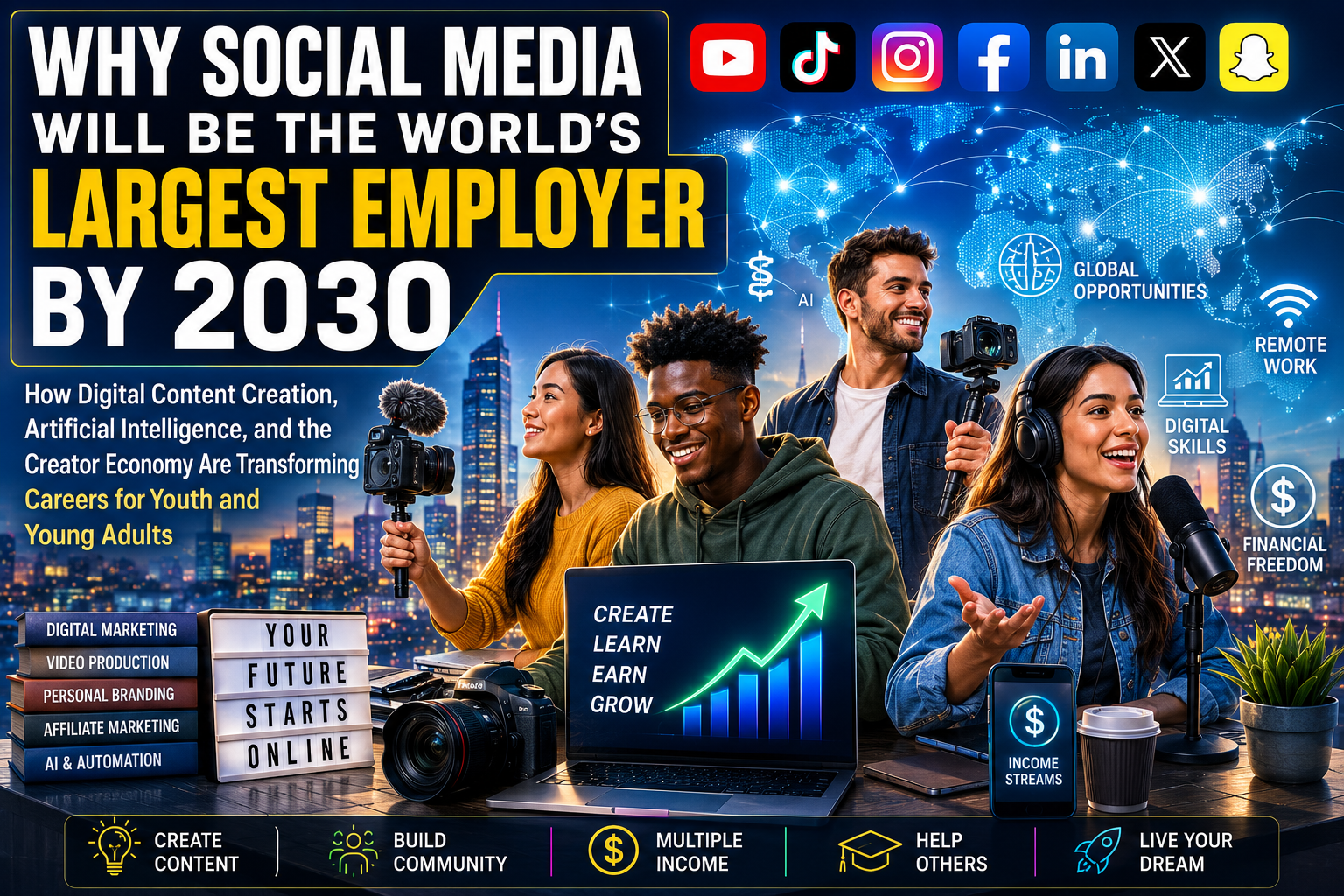
  • Why Social Media Will Be the World’s Largest Employer by 2030

    Why Social Media Will Be the World’s Largest Employer by 2030

    How Artificial Intelligence, Digital Skills, and the Creator Economy Are Transforming Careers for Youth and Young Adults Worldwide

    Discover why social media is expected to become one of the world’s largest sources of employment by 2030. Learn how YouTube, TikTok, Instagram, Facebook, LinkedIn, Snapchat, X, artificial intelligence, and the creator economy are creating millions of career opportunities for young people worldwide.

    Introduction

    The world of work is undergoing one of the most significant transformations in modern history. Advances in digital technology, artificial intelligence (AI), high-speed internet, cloud computing, and mobile devices have fundamentally changed how people learn, communicate, conduct business, and earn a living. Among all these developments, social media has emerged as one of the most powerful forces shaping the global economy.

    What began as platforms for sharing photos and connecting with friends has evolved into a worldwide digital marketplace where people build businesses, educate millions, influence purchasing decisions, promote brands, develop professional careers, and generate sustainable income. Today, billions of people use social media every day, making it one of the largest communication ecosystems ever created. According to the Digital 2025 Global Overview Report by We Are Social and Meltwater, billions of people worldwide actively use social media, demonstrating its central role in communication, commerce, and information sharing.

    By 2030, many experts expect digital careers and creator-led businesses to continue expanding as organizations invest more heavily in online communication, e-commerce, artificial intelligence, and digital marketing. While traditional careers will remain important, social media is expected to become one of the world’s largest sources of entrepreneurship, freelance work, and digital employment.


    1. The Future of Work Is Digital

    For decades, employment largely depended on physical workplaces, office buildings, factories, or retail locations. Workers generally needed to live near their employers, commute daily, and rely on local job markets. Today’s digital economy has dramatically changed those assumptions.

    A graphic designer in Kenya can work with a company in Canada. A video editor in the Philippines can produce content for creators in Australia. A financial educator in the United States can teach thousands of students across Africa, Europe, and Asia through YouTube and online courses. Geographic boundaries are becoming less significant for many digital professions.

    The World Economic Forum has repeatedly highlighted that technological change, AI adoption, automation, and digital transformation are reshaping labor markets while increasing demand for analytical thinking, creativity, technological literacy, resilience, and lifelong learning.

    Unlike many traditional careers, digital professions reward practical skills, creativity, adaptability, and continuous learning. Employers increasingly evaluate portfolios, demonstrated expertise, certifications, and measurable results alongsideโ€”or sometimes instead ofโ€”formal educational credentials.

    For young adults entering the workforce, this shift presents unprecedented opportunities. A smartphone, reliable internet connection, and dedication to learning can now become the foundation for building an international career.


    2. Why Social Media Is Becoming a Global Employer

    Social media has evolved far beyond entertainment. It has become one of the world’s largest ecosystems for communication, education, commerce, advertising, customer service, and entrepreneurship.

    Every day, people watch educational videos, attend live classes, purchase products recommended by creators, participate in online communities, discover businesses, and learn new professional skills through platforms such as:

    • YouTube
    • TikTok
    • Instagram
    • Facebook
    • LinkedIn
    • Snapchat
    • X

    Behind every successful social media account exists an entire ecosystem of professionals.

    For example, a successful YouTube educational channel may involve:

    • Script writers
    • Researchers
    • Video editors
    • Thumbnail designers
    • SEO specialists
    • Graphic designers
    • Motion graphics artists
    • Social media managers
    • Community moderators
    • Virtual assistants
    • Advertising specialists
    • Brand partnership managers

    Consequently, one successful creator often generates employment opportunities for numerous other professionals.

    According to HubSpot’s marketing research, organizations continue increasing investment in social media marketing because consumers increasingly discover products, brands, and educational content through digital platforms.

    This growing demand means businesses of every sizeโ€”from local shops to multinational corporationsโ€”require skilled professionals capable of producing engaging digital content.


    3. The Rise of the Creator Economy

    One of the most important economic developments of the past decade has been the rapid expansion of the creator economy.

    The creator economy refers to individuals who build audiences online and earn income by creating valuable content, products, services, or communities.

    Unlike traditional employment, creators often operate as entrepreneurs rather than employees. They may generate revenue from several sources simultaneously, including:

    • Advertising revenue
    • Affiliate marketing
    • Brand sponsorships
    • Online courses
    • Digital downloads
    • eBooks
    • Consulting
    • Coaching
    • Membership communities
    • Merchandise
    • Speaking engagements
    • Freelance services

    This diversified approach reduces dependence on a single employer and provides greater financial flexibility.

    Research from Adobe’s Future of Creativity studies has shown that millions of people worldwide identify themselves as creators, and the creator economy continues expanding across age groups, industries, and geographic regions.

    Importantly, creators are no longer limited to entertainment.

    Today’s successful creators include:

    • Teachers
    • Doctors
    • Lawyers
    • Financial advisors
    • Economists
    • Engineers
    • Software developers
    • Fitness coaches
    • Nutrition experts
    • Farmers
    • Scientists
    • Language instructors
    • Historians
    • Career coaches

    People increasingly search social media for practical solutions to everyday problems, creating opportunities for experts in virtually every field.


    4. Artificial Intelligence Is Empowering Creators

    Artificial Intelligence has become one of the most influential technologies transforming digital careers.

    Contrary to fears that AI will replace all human creativity, its greatest current impact is helping creators become more productive.

    Modern AI tools assist with:

    • Brainstorming content ideas
    • Research assistance
    • Script writing
    • Grammar improvement
    • Translation into multiple languages
    • Video editing
    • Automatic subtitles
    • Voice enhancement
    • Image generation
    • Graphic design
    • Content scheduling
    • Audience analysis
    • Marketing optimization

    These technologies allow creators to spend less time on repetitive tasks and more time developing original ideas, teaching, storytelling, and engaging with their communities.

    Google, Microsoft, Adobe, and many other technology companies continue investing heavily in AI-powered creative tools, signaling that AI literacy will become an increasingly valuable workplace skill over the coming decade.

    However, AI should be viewed as an assistantโ€”not a replacement for originality, integrity, critical thinking, or authentic human communication.

    Audiences continue valuing trustworthy creators who provide unique perspectives, lived experiences, and meaningful solutions.


    5. Building a Career Without Traditional Barriers

    One of the most remarkable aspects of social media is its accessibility.

    Previous generations often needed substantial financial resources to launch businesses:

    • Office space
    • Expensive equipment
    • Employees
    • Printing costs
    • Marketing budgets
    • Distribution networks

    Today, many successful entrepreneurs begin with:

    • A smartphone
    • Free editing software
    • Internet access
    • Consistent effort
    • Valuable knowledge

    A university student can teach mathematics on YouTube.

    A chef can demonstrate recipes on TikTok.

    A photographer can sell digital products through Instagram.

    A financial educator can explain investing through LinkedIn.

    A language teacher can attract international students through Facebook or YouTube.

    These opportunities are available regardless of age, gender, nationality, or geographic location.

    This democratization of entrepreneurship is one of the defining characteristics of the modern digital economy.

    Of course, accessibility does not guarantee success. Building a sustainable audience requires patience, continuous learning, ethical behavior, originality, and consistent publishing over time. Nevertheless, social media has significantly lowered the barriers that once prevented many talented individuals from sharing their expertise with the world.

    Building Careers, Businesses, and a Global Workforce Through Digital Skills


    6. New Professions Created by Social Media

    One of the strongest indicators that social media is becoming a major global employer is the emergence of entirely new professions. Twenty years ago, careers such as YouTuber, TikTok Creator, Social Media Manager, Podcast Producer, Influencer Marketing Specialist, and UGC (User-Generated Content) Creator were virtually unknown. Today, these roles represent legitimate career paths for millions of people.

    The creator economy has expanded far beyond individuals posting videos online. Successful creators often operate like small media companies, supported by teams of editors, writers, designers, marketers, virtual assistants, photographers, accountants, legal advisors, and business managers. In many cases, one creator supports the livelihoods of several other professionals.

    Examples of fast-growing digital careers include:

    • Content Creator
    • Social Media Influencer
    • Video Editor
    • AI Content Strategist
    • Podcast Producer
    • Livestream Host
    • Affiliate Marketing Specialist
    • Community Manager
    • Thumbnail Designer
    • SEO Content Writer
    • Social Media Advertising Specialist
    • Digital Brand Consultant
    • Online Course Creator
    • Newsletter Publisher
    • Creator Business Manager

    As brands increasingly rely on digital storytelling instead of traditional advertising, demand for these professionals is expected to continue growing. Industry analyses also show that brands are moving toward longer-term partnerships with creators and using AI to identify the most effective collaborators, reflecting the increasing maturity of the creator economy.


    7. Education Has Entered the Digital Age

    Education is no longer limited to classrooms, textbooks, or lecture halls. Social media has transformed how people acquire practical knowledge, making high-quality educational content accessible to anyone with an internet connection.

    Today, millions of learners use YouTube tutorials, LinkedIn Learning, educational podcasts, and short-form video platforms to develop skills in:

    • Artificial Intelligence
    • Digital Marketing
    • Coding
    • Graphic Design
    • Video Editing
    • Entrepreneurship
    • Investing
    • Personal Finance
    • Foreign Languages
    • Photography
    • Public Speaking
    • Career Development

    This shift has created enormous opportunities for educators and professionals to share expertise while building sustainable online businesses.

    Educational creators now serve audiences that traditional institutions may never reach. Someone living in a rural village can learn coding, digital marketing, or financial literacy from experts located thousands of miles away. This democratization of education is helping reduce barriers to lifelong learning and enabling people to update their skills throughout their careers.


    8. Remote Work and the Global Digital Workforce

    The growth of remote work has reinforced the importance of social media and digital platforms in the modern economy.

    Companies increasingly hire people based on demonstrated skills rather than geographic location. Creative professionals routinely collaborate across continents, using social media not only to communicate but also to showcase portfolios, attract clients, and build professional reputations.

    A freelance designer in Kenya can work with businesses in Canada. A video editor in the Philippines can support YouTube creators in Australia. A consultant in Brazil can advise companies across Europe and North America.

    Many organizations are also embracing remote-first work models. For example, HubSpot reports that a large majority of its workforce operates remotely, illustrating how digital collaboration has become a permanent feature of many knowledge-based businesses.

    Remote work expands opportunities for talented individuals regardless of where they live, provided they possess the necessary skills, communication abilities, and professionalism.


    9. Multiple Income Streams: The New Career Model

    Traditional careers often rely on a single employer and a monthly paycheck. The creator economy encourages a different model: multiple streams of income.

    Many successful digital entrepreneurs earn revenue from several sources simultaneously, such as:

    • Platform advertising revenue
    • Affiliate marketing
    • Brand sponsorships
    • Digital products
    • Online courses
    • Membership communities
    • Consulting
    • Coaching
    • Freelance services
    • Merchandise
    • Public speaking
    • Licensing original content

    This diversified approach provides greater financial resilience because creators are not dependent on one source of income. If one revenue stream declines, others may continue supporting the business.

    However, building multiple income streams requires patience, planning, and a commitment to delivering genuine value. Sustainable success comes from trust, quality content, and ethical business practices rather than shortcuts or unrealistic promises.


    10. The Skills Every Future Creator Should Learn

    Technology changes rapidly, but several foundational skills are likely to remain valuable well beyond 2030.

    Digital Skills

    • Content creation
    • Video production
    • Photography
    • Graphic design
    • Website publishing
    • Email marketing
    • Search engine optimization (SEO)

    Communication Skills

    • Storytelling
    • Public speaking
    • Copywriting
    • Community engagement
    • Customer service
    • Presentation skills

    Business Skills

    • Personal branding
    • Sales
    • Negotiation
    • Project management
    • Financial literacy
    • Entrepreneurship

    AI Skills

    Artificial intelligence is increasingly becoming a productivity tool rather than a replacement for human creativity. Learning how to use AI responsibly for research, editing, brainstorming, translation, analytics, and workflow automation will become a valuable advantage. The World Economic Forum notes that AI is changing the skills required in many occupations while increasing the importance of both technological and human-centered capabilities.


    11. Challenges and Responsibilities

    While social media presents tremendous opportunities, it also requires responsibility.

    Successful creators should understand:

    • Copyright and intellectual property
    • Privacy protection
    • Data security
    • Ethical advertising
    • Transparency in sponsored content
    • Responsible AI use
    • Online misinformation
    • Digital well-being

    The OECD has observed that younger adults are among the most active users of social networking and generative AI, but also emphasizes the importance of balancing digital opportunities with concerns about well-being, screen time, trust, and responsible technology use.

    Creators who prioritize accuracy, authenticity, and audience trust are more likely to build lasting careers than those who focus only on short-term attention.


    12. Looking Beyond 2030

    Although this article focuses on 2030, the long-term outlook extends even further.

    Several trends are likely to shape the next decade:

    • Greater integration of AI into creative workflows
    • Expansion of multilingual content
    • Increased demand for educational creators
    • Growth in remote and freelance work
    • Continued rise of digital entrepreneurship
    • More personalized learning experiences
    • Stronger collaboration between brands and creators
    • Greater emphasis on authenticity and community

    Digital trend analyses consistently show that AI, video content, mobile technology, and social media continue to reshape how people discover information, learn new skills, and interact with businesses. Social media is becoming not only a communication platform but also a marketplace for knowledge, services, and entrepreneurship.


    Key Takeaways

    • Social media has evolved into a major global economic ecosystem.
    • Digital skills are becoming as valuable as many traditional workplace skills.
    • AI is increasing productivity and creating new opportunities for creators who use it responsibly.
    • The creator economy supports far more careers than just influencers.
    • Remote work enables people to serve clients and audiences worldwide.
    • Multiple income streams improve long-term financial resilience.
    • Continuous learning will remain essential as technology evolves.
    • Authenticity, trust, and ethical practices are key to sustainable success.

    Frequently Asked Questions

    Can someone start a social media career without a college degree?

    Yes. Many successful creators build careers through practical skills, portfolios, and consistent content. Formal education can be valuable, but many digital careers also reward demonstrated ability and continuous learning.

    Which social media platform is best for beginners?

    The best platform depends on your goals and audience. YouTube is well suited for long-form educational content, TikTok and Instagram excel at short-form video, LinkedIn is strong for professional networking, and Facebook remains valuable for communities and local engagement.

    Will artificial intelligence replace content creators?

    AI is expected to automate many repetitive tasks, but human creativity, expertise, trust, and authentic communication remain essential. The most successful creators are likely to combine AI tools with original thinking and strong relationships with their audiences.

    What is the most important skill for future creators?

    Adaptability. Technology changes quickly, so creators who continue learning, experimenting, and improving are best positioned for long-term success.

    Conclusion

    The future of work is becoming increasingly digital, connected, and knowledge-driven. Social media is no longer simply a place to communicate with friends or share personal experiencesโ€”it has become a global platform for education, entrepreneurship, innovation, and professional growth. As technology continues to evolve, the ability to create valuable content, understand digital marketing, leverage artificial intelligence, and build trusted online communities will become increasingly important for individuals, businesses, and economies around the world.

    Young people entering today’s workforce have access to opportunities that previous generations could scarcely imagine. A smartphone, an internet connection, curiosity, and a commitment to lifelong learning can provide access to global audiences, international clients, and diverse income opportunities. While success is never guaranteed and requires persistence, integrity, and continuous improvement, the creator economy offers one of the most accessible pathways to entrepreneurship in history.

    By investing in digital skills today, individuals can prepare themselves for careers that are flexible, global, and resilient in the face of technological change. Whether your goal is to become a content creator, educator, freelancer, consultant, marketer, or entrepreneur, the digital economy rewards those who continue learning and adapting.

    If you want to continue building your knowledge in digital technology, personal finance, artificial intelligence, social media, and online business, visit ConvertsCurrency.com for practical guides, tools, and educational resources. You can also subscribe to Growth Mind and Motivation on YouTube for free videos covering social media skills, AI, digital careers, entrepreneurship, and strategies to help you succeed in the rapidly evolving digital economy.